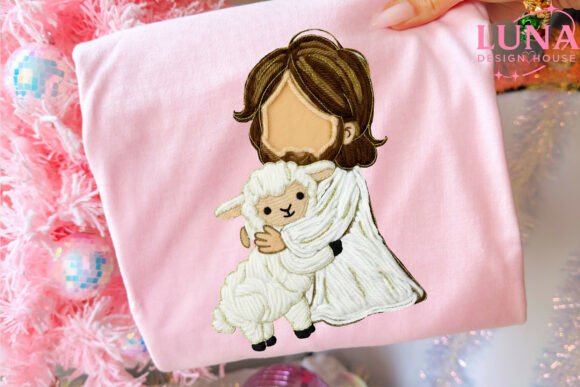
Patchwork Jesus Easter Butterfly PNG
First Impression: A Gentle, Handmade Easter Moment
When I opened Patchwork Jesus Easter Butterfly PNG, I didn’t see a generic holiday graphic—I saw a quiet, stitched-together story. The patchwork aesthetic gives it warmth and approachability, while the butterfly and subtle Jesus motif balance reverence with renewal. It’s not bold or flashy; it’s thoughtful. That tells me right away this isn’t a design for high-contrast streetwear—it’s made for soft, intentional pieces: a baby onesie for an Easter baptism, a linen tea towel for a church kitchen, or a cotton tote bag sold at a faith-based craft fair. The composition feels balanced—not too tall, not too wide—with clear negative space around the central figure. That breathing room matters more than most designers realize when digitizing for embroidery.
Where It Shines: Real Projects, Real Reactions
I tested Patchwork Jesus Easter Butterfly PNG as the focal point on a medium-weight cotton apron for a local bakery’s Easter pop-up. Stitched in matte rayon thread with light tear-away stabilizer, it held up beautifully—no puckering, no distortion. Customers paused to look. Several asked, “Is that hand-stitched?” That’s the handmade product magic: the patchwork texture reads as tactile, even before you touch it. It works just as well on a lightweight sweatshirt (with cutaway stabilizer), a 100% cotton pillow cover (where the gentle curves soften against fabric drape), or a simple kitchen towel (where the butterfly wings echo the natural flow of woven cotton).
For Etsy sellers and small shop owners, this design fits cleanly into curated collections: Easter nursery decor, Christian-themed baby gifts, or spring-themed boutique merchandise. It’s gentle enough for gender-neutral baby embroidery, meaningful without being overtly doctrinal, and visually cohesive across formats—from embroidered patch to printable mockup used in digital listings. I’ve seen similar designs fall flat when scaled down for caps or curved surfaces, but this one’s proportions hold. The butterfly wings provide natural anchor points, and the central figure avoids fine linework that would blur or vanish on textured fabrics like terry cloth or fleece.
Where to Proceed Thoughtfully
This isn’t a one-size-fits-all machine embroidery design. On stretchy fabric—think jersey tees or baby bodysuits—you’ll need excellent stabilization and possibly a slight reduction in stitch density to prevent tunneling. Tiny hoop sizes (under 4”) will compress detail, especially in the patchwork seams and wing veining. Those areas are delicate but not fragile—if you’re stitching for commercial embroidery, test them first on scrap fabric with your exact thread and stabilizer combo.
Dark fabric requires careful thread color planning. The design relies on contrast between patch sections and background, so white or ecru thread on navy or charcoal may mute the effect unless you add a light underlay. And while it reads clearly on smooth cotton, avoid using Patchwork Jesus Easter Butterfly PNG on highly napped or fuzzy surfaces like velour or thick terry without adjusting fill stitch angles—those tiny satin stitch transitions can snag or disappear.
Design Integrity in Finished Products
What sets this apart from mass-produced Easter graphics is its visual honesty. It doesn’t scream “sale”—it invites pause. That builds customer trust. When buyers see this on a personalized gift or small shop product, they sense intentionality: time, care, and alignment with values. For craft business owners, that translates directly to perceived value and repeat engagement. It also supports brand consistency—whether you’re selling embroidered patches, custom apparel, or digital embroidery files, this design reinforces a calm, artisanal voice.
That said, don’t assume it automatically elevates every project. Toss it onto a busy, patterned tote without considering scale or placement, and it gets lost. Use it where it has room to breathe—and where your audience values meaning over momentum.
Practical Notes Every Embroidery Designer Should Check
- Test first: Run a sample on your target fabric—even if it’s the same base material you’ve used before. Thread tension and stabilizer interaction change everything.
- Review stitch density: High-density fill areas (like the butterfly body) may benefit from slightly reduced density on lightweight fabrics to avoid stiffness.
- Confirm hoop size: This design likely fits comfortably in a 5x7 hoop, but verify before batching orders—especially if you’re prepping for craft fairs or holiday deadlines.
- Inspect small details: Zoom in on corners, seam lines, and wing tips. Are there running stitches where satin stitch should be? Does the file include optional outlines for hand-guided accents?
- Mock it in black and white: Print a grayscale version to check tonal separation—critical for dark fabric applications and digital previews.
- Stabilizer choice matters: Light tear-away works for stable wovens; cutaway is safer for knits or layered garments like reversible aprons.
- Licensing clarity: Before listing finished products or reselling the digital embroidery file, confirm whether Patchwork Jesus Easter Butterfly PNG permits commercial use—especially important for Etsy sellers and digital product sellers.
Final Thought: A Design That Earns Its Place
Patchwork Jesus Easter Butterfly PNG won’t dominate a trend report—but it will earn quiet appreciation on a baby blanket folded neatly in a boutique window, or bring a soft smile to someone receiving a custom embroidered sweatshirt after a long winter. It belongs in the toolkit of designers who understand that sometimes the most powerful embroidery isn’t the loudest, but the one that feels like it was made *for* someone—not just *at* them. Whether you’re creating holiday embroidery for a church fundraiser, developing T-Shirt Designs for a seasonal collection, or building design assets for a growing craft business, this is a grounded, usable, human-centered piece. Just give it the attention it deserves—test it, tune it, and let it speak softly where it matters most.